The Timeless Grandeur of Indian Hand Embroidery
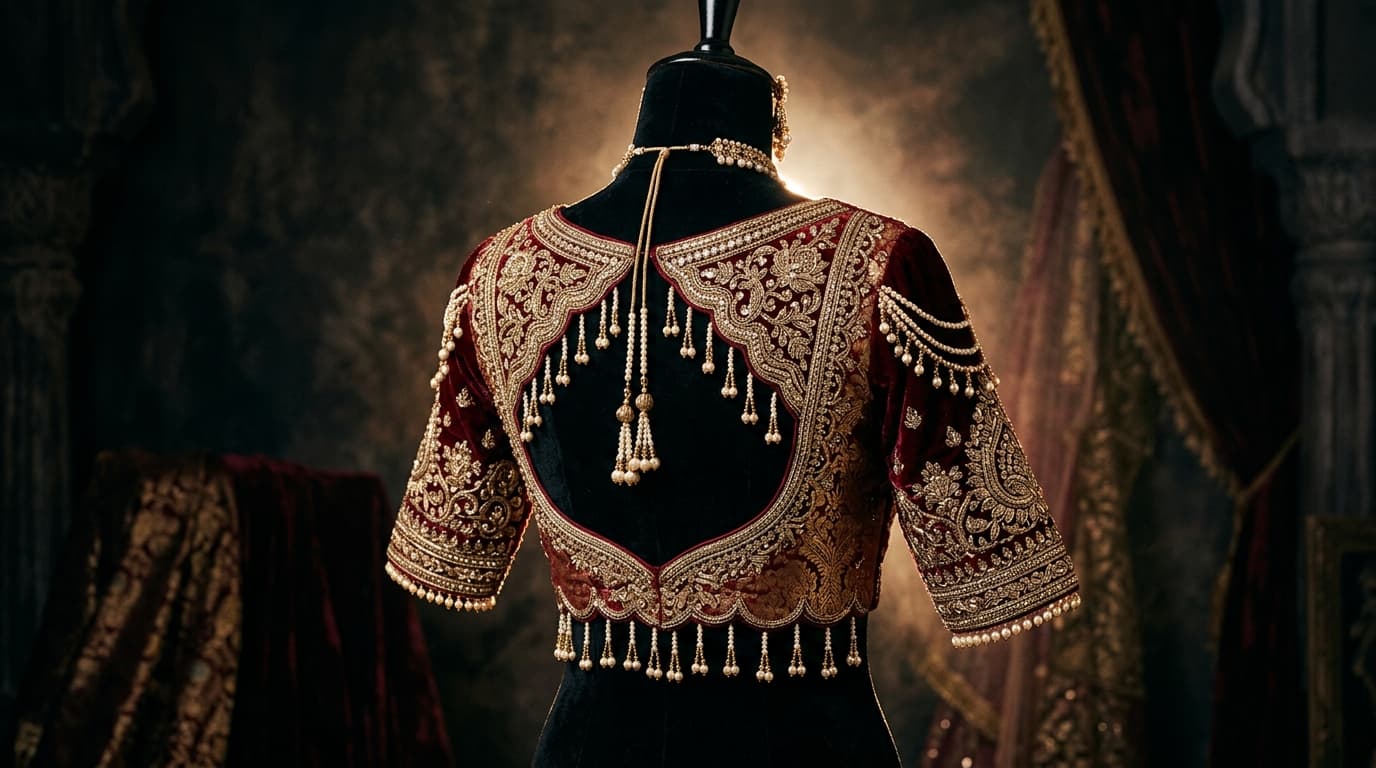
India’s rich textile heritage is celebrated across the world for its unmatched richness and artisanal complexity. While modern digital embroidery machines can replicate high volumes of stitching in seconds, they can never replicate the soul, tactile depth, and dimensional luster of authentic handmade surface ornamentation. In luxury bridal couture, haute bridal blouses, and heirloom lehengas, hand embroidery remains the undisputed crown jewel.
1. The Art and Mechanics of Aari Needlework (Maggam Work)
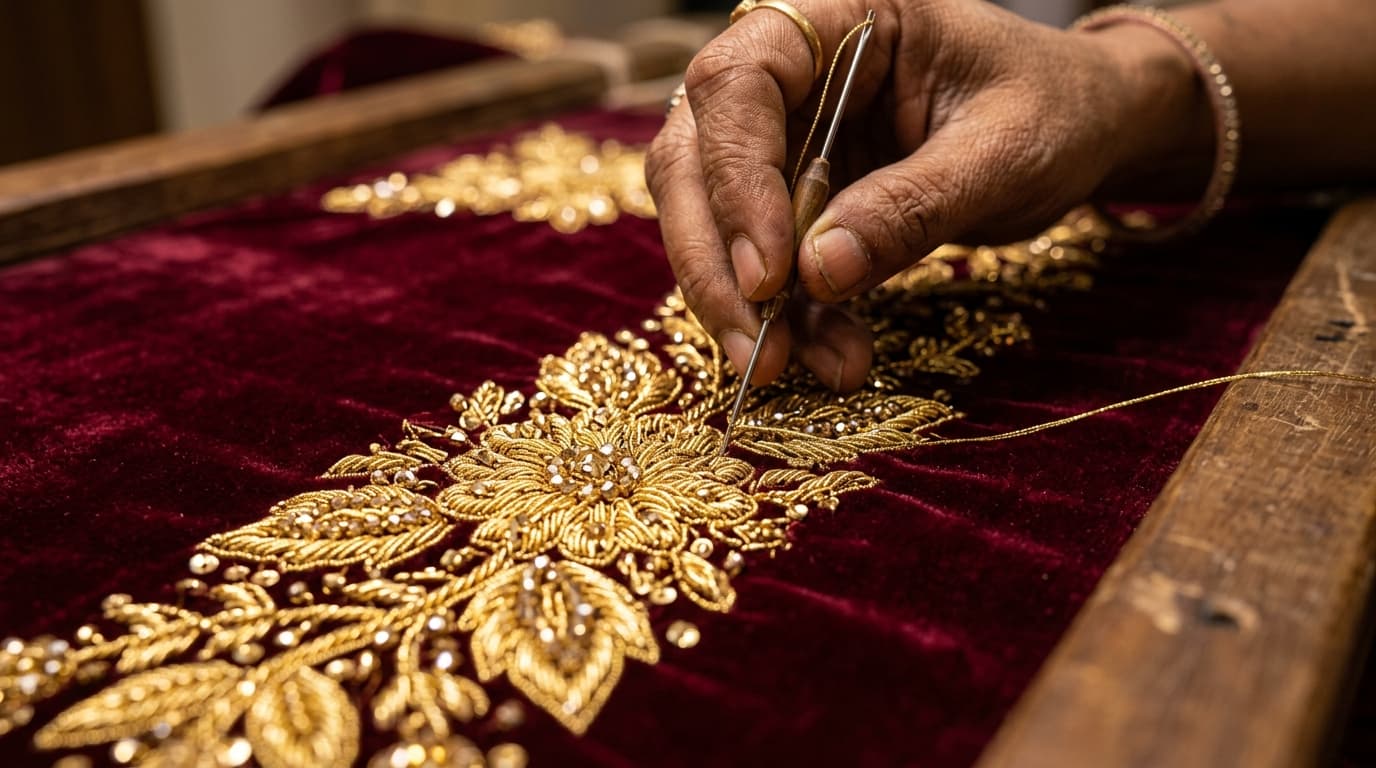
Originating during the Mughal era and preserved by master artisans across Kashmir, Gujarat, and South India, Aari embroidery is executed using a specialized pen-like needle featuring a sharp micro-hook at its tip (known as the Aari needle or khatia needle).
Unlike standard hand needles where thread is pushed back and forth from top to bottom, Aari work keeps the thread spool below the stretched fabric frame (Adda). The artisan operates from above, swiftly looping the needle downwards to catch the thread and pulling up a continuous, unbroken chain stitch at lightning speed.
Essential Materials in Master Aari Crafting:
- Zari Threads: Metallic gold, antique copper, and silver threads twisted with silk or polyester cores.
- Cutdana & Sugar Beads: Micro glass cylinder beads that catch light across bridal necklines and sleeve cuffs.
- French Sequins & Kundan Stones: Flat and concave foil-backed stones set with golden bezels for maximum brilliance.
- Silk Floss (Resham): Untwisted pure silk threads providing vibrant shading and gradient fills within floral motifs.
"An authentic hand-embroidered bridal garment takes between 80 to 200 hours of continuous hand-stitching. When a bride wears hand-crafted Aari work, she is wearing centuries of living Indian cultural heritage." — Dr. (Hon.) Sheetal Santosh Patil
2. Zardozi: The Royal Metal Thread Sculpture
Derived from the Persian words Zar (gold) and Dozi (embroidery), Zardozi is a three-dimensional metal embroidery historically patronized by royal courts to embellish velvet canopies, royal robes, and court attire.
Zardozi does not simply sew flat stitches; it builds structural relief using delicate metallic springs and coils:
- Dabka: A thin, flexible, spiral-coiled wire cut into tiny increments and sewn like beads to form intricate vine borders.
- Nakshi: A textured, crimped metallic spring wire that produces an iridescent shimmer when light reflects off its multi-faceted surfaces.
- Kora: A duller, matte metallic coil used for contrasting background shading against glossy Dabka.
- Badla / Sitara: Flattened metallic wires woven directly through fabric to form reflective lattice (jaal) grids.
3. Modern Haute Couture Integration
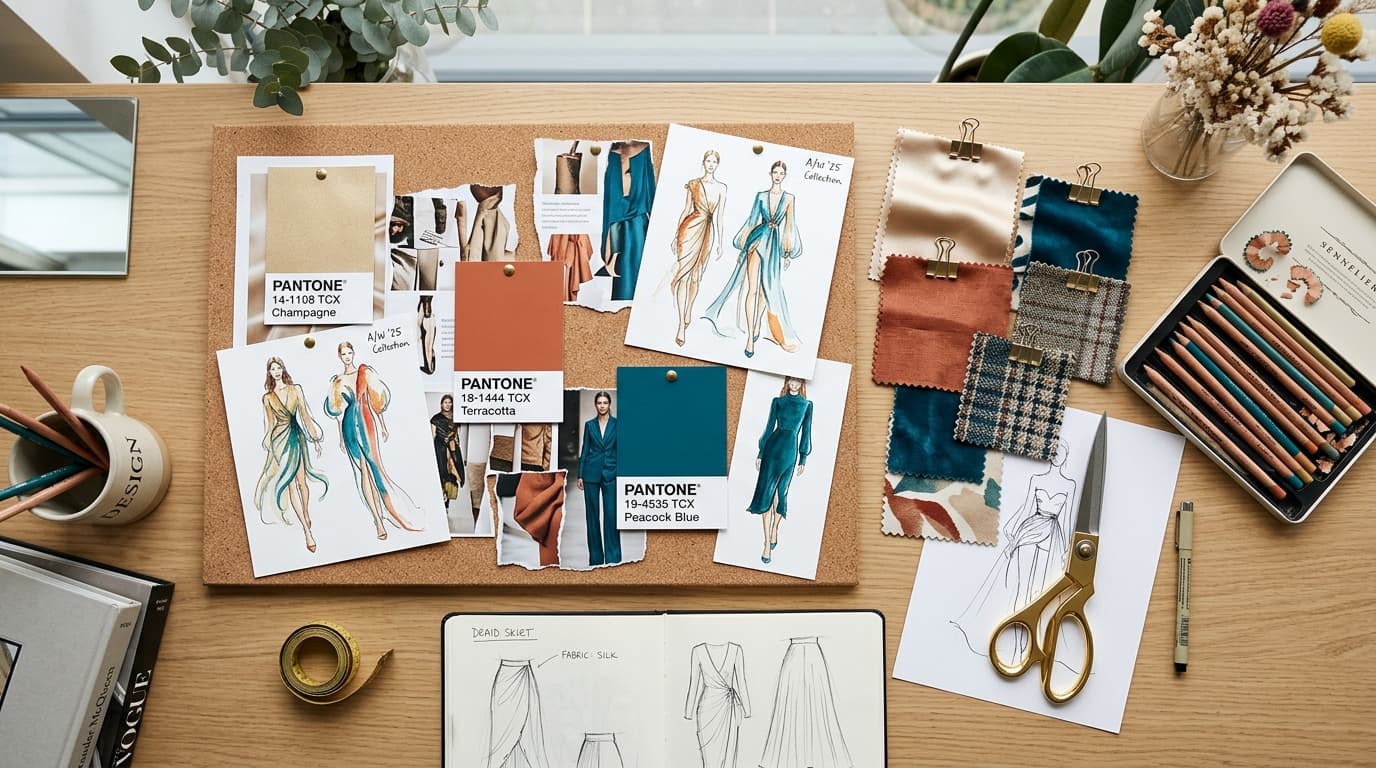
Contemporary fashion designers are redefining heritage embroidery by merging centuries-old needlework with contemporary minimalist cuts. Modern couturiers combine Aari beadwork with sheer organza cutouts, metallic thread ombre gradients on modern pant-suits, and sculptural 3D floral petals mounted onto structured corsetry. For any serious Indian fashion designer, understanding the nuances of embroidery technique and stitch density is fundamental to building high-ticket couture collections.